Seborrheic Dermatitis: What Science Says — and Why C8/C10 Oil Is Trending
Seborrheic dermatitis is a chronic inflammatory skin condition that flares in episodes. It appears mainly where sebaceous glands are dense: the scalp, eyebrows, nasolabial folds, beard area, and behind the ears. Typical symptoms include redness, itching, and greasy-yellow or dry flakes. A major 2024 meta-analysis shows this is far from a niche issue: global prevalence is around 4.38% — roughly 5.64% among adults.
Despite how common it is, many affected people feel frustrated. They are often given products without understanding what is happening biologically on their skin. Current research paints a clearer picture: seborrheic dermatitis is neither a simple “fungus problem” nor plain “dry skin”. It arises from a complex interplay of multiple factors.
Causes: What happens on the skin?
Science today often describes development through a pathophysiological triangle of microbiome, skin barrier, and immune system:
The role of Malassezia yeast: This genus is part of almost everyone’s natural skin flora. In affected people, however, it causes problems. The yeast feeds on skin lipids (sebum) and releases free fatty acids in the process. These metabolites can trigger inflammation and irritation in sensitive individuals.
A disrupted skin barrier: Recent reviews show that barrier function is impaired in seborrheic dermatitis. The result is increased transepidermal water loss (TEWL) and altered lipid composition. This explains why skin often feels oily yet still dry, rough, and flaky.
Individual immune response: Why some people remain symptom-free despite high Malassezia density while others develop strong inflammation relates to genetics and innate immunity. Dysregulated inflammatory pathways lead to visible redness and the typical burning sensation.
External triggers: Besides hormones (the condition usually appears after puberty), stress, climate, environmental factors, and personal care habits play a major role in triggering new flares.
Standard therapies and their limits
Dermatology guidelines treat topical antifungals such as ketoconazole or ciclopirox as gold standard. Zinc pyrithione, selenium sulfide, and salicylic acid are also widely used. For acute severe inflammation, clinicians may use topical corticosteroids short-term.
The problem: many medicated shampoos and creams dry out an already compromised barrier with long-term use or irritate it further. Because the condition is chronic and often needs ongoing maintenance, more people seek a gentle, everyday complement to their routine.
C8/C10 (MCT oil) in focus: Does the community trend hold up?
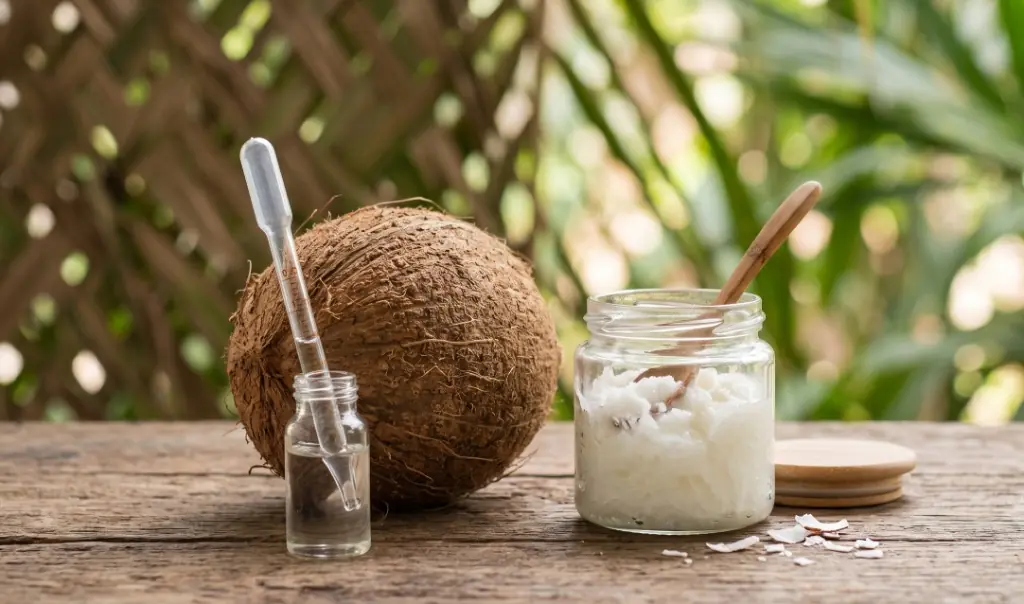
For years, forums like Reddit (especially r/SebDerm) have discussed a specific approach: applying pure C8/C10 oil (medium-chain triglycerides, often sold as MCT oil without C12).
Biological plausibility
Common plant oils (olive, argan) contain long-chain fatty acids that can feed Malassezia and worsen flares. C8 (caprylic acid) and C10 (capric acid) are medium-chain fatty acids. A frequently cited 1999 in-vitro study and newer reviews suggest these lipids may not promote — and may even inhibit — Malassezia growth in the lab.
What science has not yet proven
Scientific honesty matters here: there are still no robust human clinical trials proving C8/C10 oil reliably heals seborrheic dermatitis or replaces established medical actives. Positive reception rests mainly on biological plausibility, lab data, and thousands of patient reports.
Community experience broadly shows many users achieve calmer skin and less flaking by reducing to this simple, low-irritant lipid — while a minority see no change or mild irritation.
Conclusion
Modern dermatology views seborrheic dermatitis as a multifactorial disorder of skin barrier and microbiome. While established therapies remain essential for acute phases, a minimalist C8/C10 approach offers a scientifically plausible, low-irritant complement for daily care of stressed skin. It is not a medical miracle cure, but a promising, reduced building block for long-term skin management.
Sources and references
- American Academy of Dermatology (AAD): Seborrheic dermatitis: Overview, Diagnosis and Treatment.
- StatPearls / NCBI Bookshelf: Seborrheic Dermatitis (Current Pathophysiology).
- JAMA Dermatology (2024): The Global Prevalence of Seborrheic Dermatitis: A Systematic Review and Meta-Analysis.
- Cosmetics (2024): Seborrheic Dermatitis: From Microbiome and Skin Barrier Involvement to Emerging Approaches in Dermocosmetic Treatment.
- Papavassilis et al. (1999): Medium-chain triglycerides inhibit growth of Malassezia.
- Guimarães et al. (2022): The Potential of Fatty Acids and Their Derivatives as Antifungal Agents.
- r/SebDerm Community Wiki: Guidelines and user reports on "How to Apply MCT Oil".